
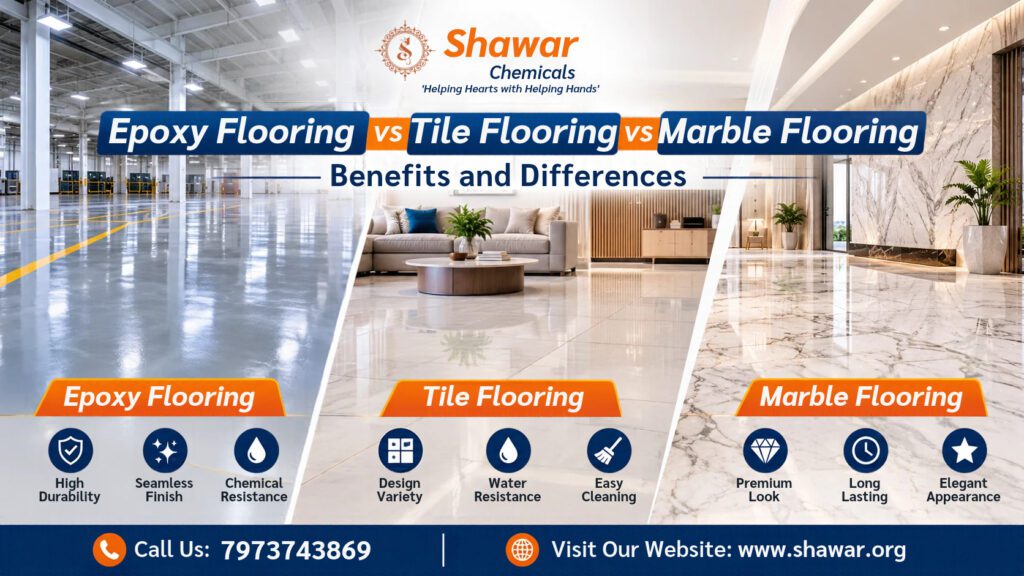
Flooring is an important part of residential, commercial and industrial construction. The right flooring material affects the appearance, durability, cleaning requirements and overall maintenance of a space. Epoxy flooring, tile flooring and marble flooring are three commonly used options, each offering different features and benefits.
Understanding the differences between these flooring types helps homeowners, contractors and builders select a suitable option according to their requirements and budget.
1. What Is Epoxy Flooring?
Epoxy flooring is a surface coating made by mixing epoxy resin with a hardener. Once these two components are mixed and applied to a properly prepared surface, they form a hard, seamless and durable finish.
Epoxy flooring is commonly used in factories, warehouses, hospitals, garages, showrooms and commercial buildings. It is also becoming popular in modern residential spaces.
Benefits of Epoxy Flooring:
- Durability: It creates a strong surface that can withstand regular foot traffic and many types of mechanical wear.
- Easy Maintenance: Its seamless finish makes cleaning easier because there are no regular tile joints where dirt can collect.
- Chemical Resistance: Depending on the epoxy system, it can resist exposure to certain chemicals, oils and cleaning agents.
- Appearance: It is available in different colours and finishes, including glossy, matte and decorative options.
- Low Maintenance: A properly installed epoxy surface generally requires less joint-related maintenance than tiled flooring.
However, surface preparation and correct mixing of resin and hardener are important for achieving a durable finish.
2. What Is Tile Flooring?
Tile flooring is one of the most commonly used flooring options in Indian homes and commercial spaces. Ceramic, vitrified and porcelain tiles are available in different sizes, colours, textures and designs.
Tiles are suitable for bedrooms, kitchens, bathrooms, living rooms and other areas.
Benefits of Tile Flooring:
- Design Variety: Tiles are available in numerous patterns, colours, textures and finishes.
- Water Resistance: Many ceramic and vitrified tiles offer good water resistance, making them suitable for kitchens and bathrooms.
- Easy Cleaning: Regular sweeping and mopping are generally sufficient to maintain tiled surfaces.
- Replacement: Individual damaged tiles can often be replaced without changing the entire floor.
- Availability: Tiles are available in different price ranges, making them suitable for various budgets.
One important consideration is the grout between tiles. If grout is not properly applied or maintained, dirt and moisture can collect in the joints. Using suitable tile adhesive and grout materials also helps improve installation quality.
3. What Is Marble Flooring?
Marble flooring is a natural stone flooring option known for its elegant appearance and unique patterns. Each marble slab has natural veins and colour variations, giving floors a distinctive look.
It is commonly used in residential properties, hotels, offices, luxury apartments and commercial interiors.
Benefits of Marble Flooring:
- Natural Appearance: Marble provides a premium appearance with natural patterns and textures.
- Long-Term Use: With proper installation and maintenance, marble flooring can last for many years.
- Polished Finish: It can be polished to achieve a smooth and attractive surface.
- Property Appearance: Marble is often selected for premium residential and commercial interiors.
- Variety: Different types of marble are available in different shades, patterns and finishes.
However, marble is a porous natural stone and may absorb liquids if it is not properly sealed. It can also develop scratches and stains, so regular care is important.
4. Epoxy Flooring vs Tile Flooring vs Marble Flooring
All three flooring options have different properties. Their suitability depends on the location, expected usage, maintenance requirements and installation budget.
| Comparison | Epoxy Flooring | Tile Flooring | Marble Flooring |
|---|---|---|---|
| Appearance | Modern and seamless | Multiple designs | Natural and premium |
| Durability | High with correct installation | Good | Good with proper care |
| Maintenance | Generally easy | Easy, but grout needs care | Requires regular care |
| Joints | Seamless finish | Grout joints | Slab joints |
| Water resistance | Depends on the epoxy system | Generally good | Requires sealing |
| Chemical resistance | Depends on the system | Varies by tile type | Generally sensitive to chemicals |
| Installation | Requires surface preparation | Requires adhesive and grouting | Requires skilled installation |
| Common uses | Industrial and commercial spaces | Homes and commercial spaces | Premium interiors |
5. Which Flooring Is Better for Different Spaces?
The choice of flooring depends on how a particular area will be used.
For Residential Spaces: Tiles and marble are popular choices for living rooms, bedrooms and other interior areas. Epoxy flooring can also be considered for garages, utility areas and selected modern interiors.
For Commercial Spaces: Epoxy flooring is suitable for many showrooms, hospitals, workshops and commercial facilities where a seamless and easy-to-clean surface is preferred. Tiles and marble are also used depending on the interior design.
For Industrial Spaces: Epoxy flooring is often preferred in warehouses, factories and production areas because suitable epoxy systems can provide a durable, seamless and chemical-resistant surface.
For Kitchens and Bathrooms: Tiles are commonly selected because many varieties offer good water resistance and are available in different surface textures. Proper waterproofing and suitable grout are also important.
6. Factors to Consider Before Choosing Flooring
Before selecting any flooring material, consider the following points:
- Budget: Compare the material, installation and long-term maintenance costs.
- Location: Consider whether the flooring is required for a home, factory, showroom or commercial building.
- Traffic: High-traffic areas require materials suitable for regular movement and wear.
- Maintenance: Choose a surface that matches the cleaning and maintenance facilities available.
- Installation Quality: Proper surface preparation and professional installation are important for all flooring types.
- Safety: Consider slip resistance, especially in bathrooms, kitchens and industrial working areas.
7. Epoxy Flooring Solutions at Shawar Chemicals
Shawar Chemicals provides construction chemical solutions for different flooring and building requirements. Its epoxy flooring materials are used in flooring applications where proper bonding, surface preparation and application methods are important.
Epoxy flooring generally involves two components: Part A (resin) and Part B (hardener). Both components need to be mixed in the recommended proportion before application. The prepared material is then spread evenly over a properly prepared surface according to the product instructions.
Selecting the right material and following the recommended application process helps achieve a suitable flooring finish.
Conclusion
Epoxy flooring, tile flooring and marble flooring each have their own advantages. Tiles offer design flexibility and practical maintenance, while marble provides a natural and premium appearance. Epoxy flooring is a suitable option for areas that require a seamless, durable and easy-to-clean surface.
The final choice should depend on the purpose of the space, installation conditions, expected traffic and maintenance requirements. Understanding these differences makes it easier to select the right flooring solution for residential, commercial and industrial projects.
About Shawar Chemicals
Shawar Chemicals offers construction chemical solutions, including epoxy flooring materials, tile adhesives, waterproofing products, grouts and other construction-related solutions.