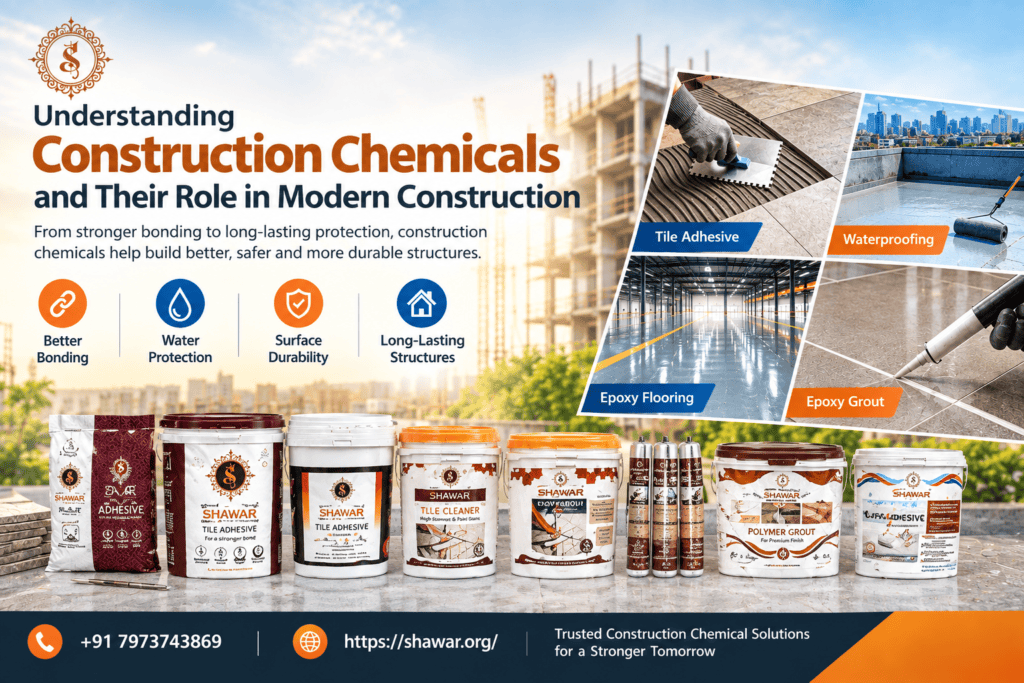
Construction projects involve several materials and processes that work together to create a durable structure. While cement, sand, steel, and tiles receive much of the attention, construction chemicals also play an important role in improving bonding, preventing water penetration, and protecting surfaces from everyday wear and environmental conditions. Choosing the best construction chemicals depends on the type of project, the surface, the application method, and the conditions to which the finished structure will be exposed. Understanding these factors helps builders, contractors, and homeowners make informed decisions and avoid common construction problems.
Why Construction Chemicals Matter
Construction chemicals are used at different stages of building, from surface preparation and tile installation to waterproofing, flooring, and repairs. Each product is developed for a specific purpose, so selecting a suitable material is more important than simply choosing a product based on its price or general claims.
For example, a product designed for interior applications may not provide the flexibility or weather resistance required outdoors. Similarly, a material suitable for ordinary ceramic tiles may not be appropriate for large-format or vitrified tiles. The best construction chemicals are those that meet the technical requirements of the application and are used according to the manufacturer’s instructions.
Tile Adhesive: An Alternative to Traditional Cement-Sand Mortar
Cement and sand have traditionally been used to install tiles. Although this method remains suitable for certain applications, modern tiles often require more specialised installation materials. Larger tile sizes, low-absorption surfaces, and changes in temperature can make achieving consistent bonding more challenging.
Polymer-modified tile adhesives are formulated to improve adhesion, workability, and, depending on the product, flexibility and resistance to movement. They can help reduce the risk of hollow spots and tile debonding when the correct adhesive is selected and applied properly.
Before choosing a tile adhesive, it is important to consider the tile material, size, installation surface, and whether the work is being carried out indoors or outdoors. Surface preparation, adhesive coverage, mixing proportions, and curing requirements also affect the final result.
Waterproofing: Protecting Buildings from Moisture
Water penetration is a common problem in bathrooms, terraces, balconies, basements, and water-retaining structures. If moisture enters building materials repeatedly, it can contribute to damp patches, peeling paint, deterioration of finishes, and damage to surrounding materials.
Different waterproofing systems are designed for different conditions.
Cementitious Waterproofing
Cementitious waterproofing products are commonly used in bathrooms, kitchens, basements, and other areas where a compatible coating is required over concrete or masonry. They are generally applied to prepared surfaces and may be suitable for internal wet areas, depending on the product specification.
Polymer-Based Waterproofing
Polymer-modified and acrylic waterproofing systems are used in applications where additional flexibility is required. Some formulations are suitable for exposed terraces and roofs that experience repeated heating, cooling, and rainfall. However, not every coating is designed for permanent exposure to standing water or heavy foot traffic.
Selecting the appropriate system requires an assessment of the substrate, existing cracks, drainage, exposure conditions, and the intended finish. Proper detailing around joints, drains, and pipe penetrations is equally important for long-term performance.
Epoxy Flooring for Residential and Commercial Spaces
Epoxy flooring is used in factories, warehouses, laboratories, garages, showrooms, and selected residential spaces. It creates a continuous surface that can be easier to clean than flooring systems with numerous joints.
Depending on the formulation and installation, epoxy flooring can provide good abrasion resistance, chemical resistance, and durability under regular use. Decorative systems are also available in different colours and finishes.
The performance of an epoxy floor depends on several factors, including concrete moisture levels, surface preparation, mixing ratios, application thickness, and curing time. The system must also be selected according to the expected traffic and chemical exposure. For example, a decorative coating intended for light foot traffic may not be suitable for an industrial area carrying heavy machinery.
Epoxy Grout and Its Applications
Grout fills the joints between tiles and contributes to the appearance and maintenance of a tiled surface. Traditional cement-based grout is widely used, but it can absorb moisture and become stained if the product and installation are not suitable for the environment.
Epoxy grout generally offers improved resistance to staining, moisture, and many chemicals compared with conventional cement grout. These properties make it useful in selected kitchens, commercial facilities, healthcare environments, and other areas where joint cleanliness is important.
However, epoxy grout still requires correct mixing, careful application, and timely cleaning of the tile surface. Its chemical resistance and suitability for a particular environment depend on the specific formulation. The joint width, tile type, and expected exposure should all be considered before selecting a grout.
How to Choose the Best Construction Chemicals
Choosing the best construction chemicals involves more than comparing brands or prices. The product must match the actual requirements of the site.
Consider the following factors before making a selection:
- Application: Identify whether the product is intended for tile fixing, waterproofing, flooring, grouting, or repairs.
- Surface compatibility: Check whether it is suitable for concrete, plaster, masonry, existing tiles, or another substrate.
- Environmental conditions: Consider temperature variations, rainfall, humidity, water exposure, and indoor or outdoor use.
- Technical specifications: Review the product data sheet for coverage, mixing instructions, application thickness, curing time, and performance requirements.
- Surface preparation: Make sure the substrate is clean, stable, and prepared as specified.
- Installation practices: Follow the recommended application procedure and allow sufficient curing time.
- Technical support: Where the application is complex, consult a qualified professional or the manufacturer’s technical team.
These checks help reduce installation errors and improve the likelihood of achieving the intended performance.
Common Mistakes to Avoid
Construction chemical products cannot compensate for every problem caused by poor workmanship or unsuitable site conditions. Several common mistakes can affect their performance.
Using the wrong product for an application, applying coatings over damp or contaminated surfaces, adding excess water during mixing, and ignoring curing requirements can all lead to unsatisfactory results. In waterproofing work, overlooking joints and drainage details can allow water to enter even when the main surface has been coated properly.
Another common mistake is selecting materials solely on the basis of their initial cost. The total cost of a construction system also includes surface preparation, labour, application time, maintenance, and the possibility of future repairs.
Reading product instructions before starting work and ensuring that the installer understands the application procedure can help prevent avoidable problems.
Conclusion
Construction chemicals are an important part of modern building practices, but their effectiveness depends on choosing the right product and using it correctly. Tile adhesives, waterproofing systems, epoxy flooring, and specialised grouts each serve different purposes and have their own application requirements.
The best construction chemicals are not necessarily the products with the broadest claims or the lowest prices. They are products whose documented properties match the project requirements and whose installation follows the recommended procedures.
For builders, contractors, and homeowners, understanding these basic differences makes it easier to plan construction work, communicate with installers, and maintain the finished structure over time.
FAQs: Best Construction Chemicals
1. What are construction chemicals?
Construction chemicals are specialised products used to improve bonding, waterproofing, durability, flooring, grouting, and repair work in buildings.
2. How do I choose the best construction chemicals?
Choose products based on the application, surface type, environmental conditions, technical specifications, and manufacturer’s instructions.
3. Which construction chemicals are used for waterproofing?
Cementitious coatings, polymer-modified systems, acrylic coatings, and other specialised membranes are used depending on the surface and exposure conditions.
4. Why is tile adhesive better suited than cement-sand mortar for some tiles?
Tile adhesive can provide improved bonding and workability for modern tiles when the correct formulation is selected for the tile and substrate.
5. What is the difference between epoxy grout and cement grout?
Epoxy grout generally offers better stain, moisture, and chemical resistance than conventional cement grout.
6. Where is epoxy flooring commonly used?
Epoxy flooring is commonly used in factories, warehouses, garages, laboratories, showrooms, and selected residential spaces.
7. Which waterproofing chemical is suitable for terraces?
The suitable product depends on the terrace substrate, water exposure, movement, drainage, and whether the coating will remain exposed to sunlight.
8. Can construction chemicals prevent dampness and seepage?
Suitable waterproofing products can help control moisture penetration when the underlying cause is identified and the system is correctly installed.
9. Why is surface preparation important before applying construction chemicals?
Proper surface preparation improves adhesion and helps reduce failures caused by dust, loose material, contamination, or unsuitable moisture conditions.
10. Are construction chemicals suitable for both residential and commercial projects?
Yes, different construction chemical formulations are available for residential, commercial, and industrial applications.
11. What should I check before buying construction chemicals?
Check the product data sheet, intended application, coverage, compatibility, mixing instructions, curing time, and relevant performance specifications.
12. Do construction chemicals require professional application?
Some products can be applied by trained DIY users, while specialised waterproofing, epoxy flooring, and repair systems may require experienced applicators.