
In this blog and guide solution, we will understand what proper waterproofing involves, when it should be done, and how to choose the right waterproofing solution for different surfaces.
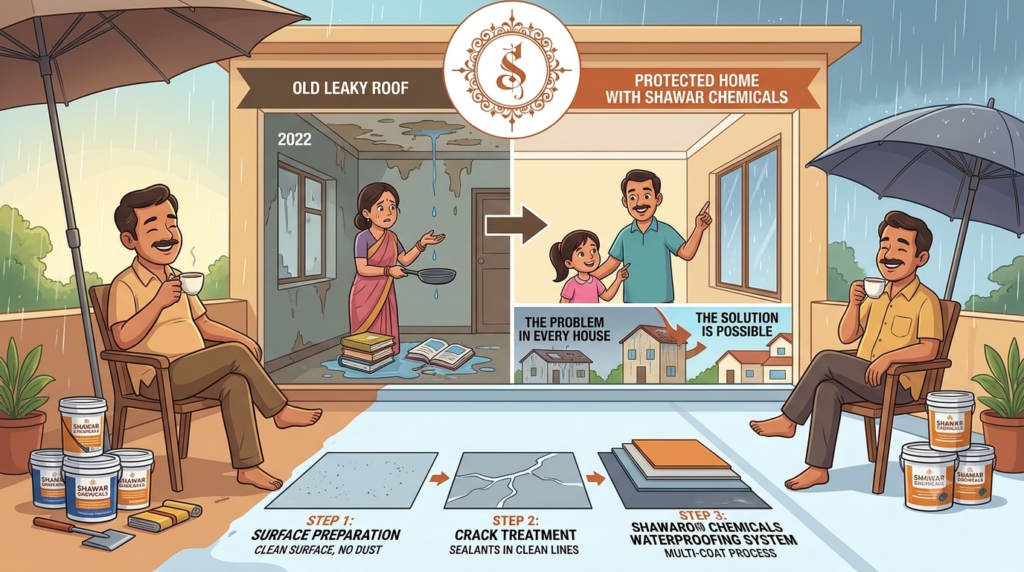
Imagine a middle-class family living in a small neighbourhood in Lucknow. They built their home in 2019. Every room, every wall and every corner was planned carefully because every rupee had been saved for the house. Three rooms, a small courtyard and a water tank on the terrace — it was their dream home.
Then came the monsoon of 2022. One night, water started dripping from the bedroom ceiling. Within hours, the floor was wet and their daughter’s school books and belongings were damaged. The next morning, they called a local worker. He tried one treatment, but the problem returned the following year. This is not just one family’s problem. Roof leakage, damp walls and moisture are common issues in homes, particularly during and after the monsoon. The real problem is that many homeowners look for a quick fix instead of identifying the actual source of water penetration.
The Problem Starts Before You See the Leakage
Most homeowners notice waterproofing problems only when water starts dripping from the ceiling.
But moisture often gives warning signs much earlier.
Look out for:
- Yellow or brown patches on walls or ceilings
- Peeling or bubbling paint
- White salt deposits on masonry
- Black spots or fungal growth in corners
- Damp or unusually cold walls
- Cracks around the terrace, bathroom or windows
These signs indicate that moisture may already be entering the building structure.
Ignoring them can eventually make the repair more complicated and expensive.
Part 1: Roof Leakage Solution — What Is the Right Approach?
When people notice water coming through the terrace, the first thought is usually to apply some chemical over the affected area.
But waterproofing solution is not simply about applying a product.
A proper roof leakage solution begins with understanding where the water is entering and preparing the surface correctly.
Step 1 — Surface Preparation
The terrace should be properly cleaned before any waterproofing treatment.
Dust, loose material, old coatings, algae and other contaminants should be removed.
If the surface is not properly prepared, even a good waterproofing coating may not perform as expected.
Step 2 — Crack Treatment
Cracks, joints and vulnerable areas should be identified and treated before applying the main waterproofing solution system.
Depending on the crack and application, suitable sealants or repair materials may be required.
Small cracks should not simply be ignored because water can gradually penetrate through them.
Step 3 — Apply the Waterproofing System
After surface preparation and crack treatment, the appropriate waterproofing coating or system can be applied according to the product’s technical requirements.
Application method, number of coats, drying time and coverage should always follow the manufacturer’s recommendations.
A water ponding or rainwater test may then be carried out where appropriate to check the treated area.
Part 2: Wall Waterproofing — Look Beyond the Paint
Wall dampness is another problem that homeowners frequently notice.
Sometimes the moisture comes from rainwater entering through exterior walls. In other cases, it may be related to plumbing, bathrooms, joints, ground moisture or poor construction detailing.
Exterior Wall Treatment
External walls are directly exposed to rain, sunlight and changing weather conditions.
A suitable waterproofing coating can help protect the surface from moisture penetration, provided the underlying surface is properly prepared and the coating is suitable for that application.
Interior Dampness
If moisture is entering from a bathroom, kitchen or another internal source, simply repainting the wall usually does not solve the root problem.
The source of moisture should first be identified and corrected.
For bathrooms and kitchens, waterproofing solution is ideally considered before tiling, rather than waiting until moisture problems appear.
Part 3: Understanding Construction Chemicals Can Save Unnecessary Repairs
The term construction chemicals covers much more than waterproofing.
Different construction conditions require different types of products and application methods.
| Type of Construction Chemical | Typical Purpose | Common Application |
|---|---|---|
| Cementitious Waterproofing | Moisture and water protection | Bathrooms, tanks, renovation |
| Crystalline Waterproofing | Protection within cementitious structures | Concrete structures, basements, tanks |
| Acrylic Waterproof Coating | Surface protection | Terraces and exterior walls |
| Polyurethane Sealant | Sealing joints and cracks | Joints, windows and movement areas |
| Epoxy Grout | Strong and durable joint filling | Tile joints and selected industrial applications |
The important point is simple: there is no single waterproofing chemical that is suitable for every situation.
The right product depends on the surface, exposure, movement, moisture condition and application requirements.
Part 4: How to Choose the Best Waterproofing Solution
The best waterproofing solution is not necessarily the product with the biggest claim on its label.
It is the system that matches the actual problem and is applied correctly.
Before starting waterproofing work, consider these points:
- Clean and prepare the surface properly
- Identify and repair cracks and joints
- Select the product according to the application
- Follow the recommended mixing and application procedure
- Maintain the required drying or curing time
- Apply the recommended number of coats
- Pay attention to corners, joints and vulnerable areas
- Use a trained or experienced applicator where required
- Follow the manufacturer’s technical data and recommendations
This approach can help reduce repeated repairs and unnecessary expenditure.
Why Shawar Chemicals?
Shawar Chemicals works with a range of construction chemical solutions for different building and application requirements.
The focus should always be on selecting the appropriate product for the particular surface and condition rather than using the same solution everywhere.
From waterproofing applications to sealants, grouts and other construction chemicals, proper product selection and application play an important role in achieving reliable results.
A Different Monsoon for Ranjit Bhaiya
After facing repeated leakage problems, Ranjit Bhaiya finally decided to stop looking for temporary fixes.
The terrace was inspected, the old surface was prepared properly, cracks were treated and an appropriate waterproofing coating system was applied.
When the next monsoon arrived, he was no longer checking the ceiling every time it rained.
Instead, he could simply sit on his terrace with a cup of tea and enjoy the rain.
The lesson was simple:
Waterproofing is easier to plan before a small moisture problem becomes a major repair.
What Should Homeowners Remember?
If you notice dampness, cracks, peeling paint or roof leakage, don’t wait until the problem becomes severe.
First identify the source.
Then select the right roof leakage solution or waterproofing system for that particular application.
And most importantly, remember that good waterproofing depends on three things:
Right Product + Proper Surface Preparation + Correct Application
That is where Shawar Chemicals aims to provide practical construction chemical solutions for different building requirements.