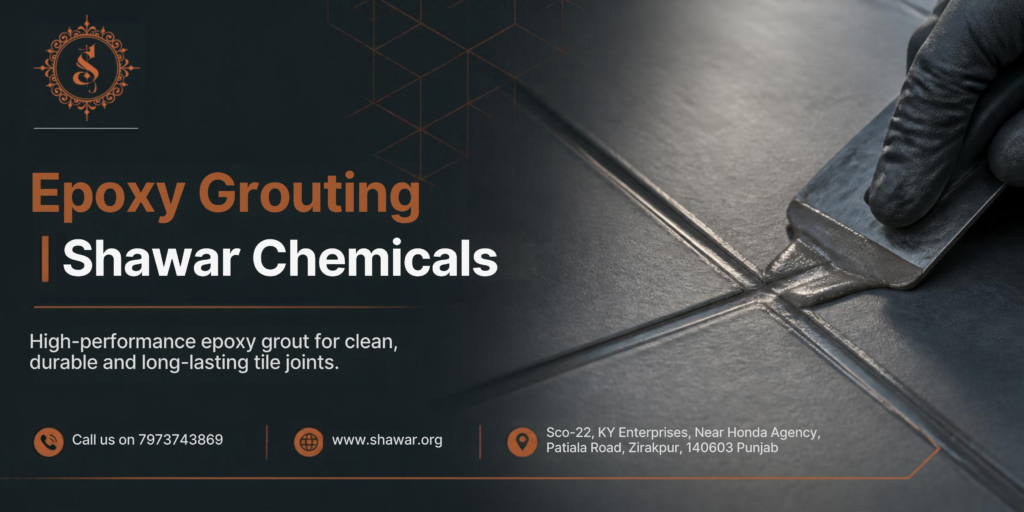
In modern construction, choosing the right grouting material is essential for achieving strong, durable, and attractive surfaces. Epoxy grouting is an effective solution for projects that require excellent bonding, moisture resistance, stain protection, and long-lasting tile joints. Unlike traditional cement-based grout, epoxy grout uses a resin-and-hardener system to create dense, durable joints.
At Shawar Chemicals, we understand the importance of selecting suitable construction chemicals for residential, commercial, and industrial projects. Understanding the properties, applications, and installation process of epoxy grout can help contractors, builders, and tile installers achieve better construction results.
What Is Epoxy Grouting?
Epoxy grouting is a process of filling the gaps between tiles or other suitable surfaces using an epoxy-based grout. It generally consists of epoxy resin, a hardener, and formulated fillers. When the components are mixed according to the manufacturer’s instructions, they form a strong material that provides excellent resistance to moisture, stains, and many chemicals.
Unlike conventional cement grout, epoxy grout has low water absorption and offers improved resistance to cracking, discoloration, and chemical exposure when correctly selected and installed.
It is commonly used in bathrooms, kitchens, hospitals, commercial buildings, laboratories, food-processing facilities, and industrial environments where joint durability and hygiene are important.
Key Benefits of Epoxy Grouting for Construction Projects
Selecting the right grout can significantly influence the appearance, maintenance requirements, and service life of tiled surfaces. Here are some important advantages of epoxy-based grouting systems.
1. High Strength and Durability
Epoxy grout creates dense and durable joints that can withstand regular use and demanding service conditions. It is suitable for applications where conventional grout may require frequent cleaning, repair, or replacement.
When the grout is compatible with the tile system and substrate, it helps maintain clean, consistent joints over time.
2. Excellent Chemical Resistance
One of the major advantages of epoxy grout is its resistance to many chemicals, including selected acids, alkalis, oils, and cleaning agents. Actual resistance depends on the formulation, chemical concentration, temperature, and exposure duration.
This makes chemical-resistant grout a useful option for laboratories, industrial facilities, pharmaceutical units, and commercial kitchens where chemical exposure is a concern.
3. Low Water Absorption and Stain Resistance
Epoxy grout generally absorbs much less water than traditional cement-based grout. Its dense structure helps resist common stains from oils, food, and other contaminants.
These properties make it a suitable choice for bathrooms, kitchens, and other areas where cleanliness and moisture management are important.
4. Easy Maintenance and Hygienic Surfaces
Because epoxy grout is less porous, dirt and stains are generally less likely to penetrate the joints. This can simplify routine cleaning and help maintain a neat appearance.
However, proper cleaning practices and suitable maintenance products are still necessary to keep tiled surfaces hygienic.
5. Attractive and Consistent Tile Joints
Epoxy grout is available in different colours, depending on the product range. It can help create uniform joints that complement ceramic tiles, vitrified tiles, and other compatible tile finishes.
For decorative installations, the right grout colour can enhance the overall appearance of floors, walls, and tiled surfaces.
Different Applications of Epoxy Grouting
The selection of grout depends on the project’s operating conditions, tile type, joint dimensions, and maintenance requirements.
Residential Bathrooms and Kitchens
Bathrooms and kitchens are frequently exposed to water, cleaning agents, and everyday stains. Epoxy grout can help maintain durable and stain-resistant joints around compatible floor and wall tiles.
Commercial Buildings and Public Spaces
Shopping centres, hotels, restaurants, and other commercial properties experience regular foot traffic. A suitable epoxy grout can help maintain consistent joints and reduce maintenance associated with staining.
Industrial Floors and Manufacturing Units
Factories and manufacturing facilities may expose floors to machinery, oils, chemicals, and frequent cleaning. Epoxy grouting products formulated for these environments can provide durable joints when used as part of a suitable flooring system.
For heavy industrial loads, the complete flooring design, substrate strength, and grout specifications must also be considered.
Hospitals and Laboratories
Healthcare facilities and laboratories require surfaces that can be cleaned regularly. Low-porosity epoxy grout can be beneficial in suitable tile installations, provided the product meets the required chemical and hygiene specifications.
How to Choose the Right Epoxy Grout
Before purchasing a grout product, evaluate the specific requirements of your project.
- Application area: Identify whether the grout will be used in a bathroom, kitchen, commercial building, or industrial facility.
- Chemical exposure: Check the manufacturer’s chemical-resistance data if the surface will come into contact with aggressive substances.
- Tile and joint compatibility: Confirm that the grout is suitable for the tile material, joint width, and installation conditions.
- Curing requirements: Review the specified curing time before allowing water exposure, foot traffic, or heavy loads.
- Colour and finish: Select a shade that complements the tiles and the intended appearance.
- Technical support: Choose a reliable construction chemical supplier that can provide product information and application guidance.
Choosing a product based on its technical specifications rather than price alone can help prevent installation problems and unnecessary maintenance.
Step-by-Step Guide to Epoxy Grout Application
Correct installation is essential for achieving the expected performance of an epoxy grout system. Follow the product manufacturer’s technical data sheet for exact mixing ratios, working time, and cleaning procedures.
Step 1: Prepare the Surface
Ensure that the tile joints are clean and free from dust, loose material, grease, and other contaminants. Remove excess tile adhesive from the joints before grouting. The installation must meet the moisture and preparation requirements specified by the manufacturer.
Step 2: Mix the Components Correctly
Most epoxy grouts contain two or more components that must be combined in the specified proportions. Mix thoroughly using the recommended procedure. Incorrect proportions or incomplete mixing can affect curing and final performance.
Step 3: Apply the Grout
Use a suitable grout float or application tool to press the mixed material firmly into the joints. Work in manageable sections, following the product’s recommended working time.
Step 4: Clean the Tile Surface
Remove excess grout and clean the tile surface using the cleaning method and products recommended by the manufacturer. Cleaning should be completed within the specified time because hardened epoxy residue can be difficult to remove.
Step 5: Allow Proper Curing
Protect the installation during curing. Avoid water exposure, traffic, and chemical contact until the grout has reached the required stage of cure according to the product instructions.
Common Mistakes to Avoid During Epoxy Grouting
Even high-quality construction chemicals can deliver poor results when applied incorrectly. Avoid these common mistakes:
- Incorrect mixing ratios: Always measure and mix the components as instructed.
- Poor joint preparation: Dust, loose adhesive, and contaminants can affect the final finish.
- Delayed cleaning: Epoxy residue can become difficult to remove once it hardens.
- Ignoring working time: Prepare manageable quantities and complete application within the specified time.
- Premature use: Allow sufficient curing before exposing the installation to water, traffic, or chemicals.
- Using an unsuitable product: Verify compatibility with the tiles, substrate, joint width, and service conditions.
Following the correct installation procedure helps improve the appearance, durability, and service performance of tiled surfaces.
Why Choose Shawar Chemicals for Construction Chemical Solutions?
Shawar Chemicals offers construction chemical solutions for tile installation, waterproofing, grouting, and other building requirements. Our focus is on helping contractors, builders, dealers, and installers identify products that match their project needs.
When evaluating grout solutions, consider technical specifications, application suitability, installation support, and long-term maintenance requirements. Selecting the right product for the job helps achieve better results and supports the durability of your construction work.
For information about Shawar Chemicals products and construction chemical solutions, visit www.shawar.org.
Frequently Asked Questions About Epoxy Grouting
1. What is epoxy grout used for?
Epoxy grout is used to fill tile joints in bathrooms, kitchens, commercial spaces, laboratories, and suitable industrial installations.
2. Is epoxy grout waterproof?
Epoxy grout has very low water absorption, but the complete tiled installation still requires appropriate waterproofing where necessary.
3. Is epoxy grout better than cement grout?
Epoxy grout generally offers better stain resistance, lower water absorption, and greater chemical resistance, while cement grout may be more economical and easier to apply in some applications.
4. How long does epoxy grout take to cure?
Curing time varies by formulation, temperature, and application conditions. Always follow the manufacturer’s technical data sheet.
5. Can epoxy grout be used for floor tiles?
Yes, suitable epoxy grout formulations can be used for floor tiles when the product is compatible with the tile system and expected service conditions.
6. Is epoxy grout suitable for industrial floors?
Yes, selected formulations are suitable for industrial tile installations where chemical resistance, durability, and frequent cleaning are important.
7. How do you clean epoxy grout after application?
Clean the surface within the manufacturer’s recommended working window using the specified tools and cleaning solution.
8. How can I select the right grout for my project?
Consider the application area, chemical exposure, joint dimensions, tile compatibility, curing requirements, and product technical specifications.
Conclusion
Epoxy grouting is a valuable solution for tile installations that require durable joints, low water absorption, stain resistance, and protection against selected chemicals. Its performance depends on choosing the right formulation, preparing the joints correctly, and following the recommended application and curing procedures.
Whether you are working on a residential bathroom, a commercial kitchen, or an industrial installation, selecting suitable construction chemicals can help improve the quality and longevity of your project.
Explore construction chemical solutions from Shawar Chemicals at www.shawar.org and choose products according to your project’s technical requirements.